
Rancho Cucamonga Voter Lookup Steps
The official starting point is the California Secretary of State's My Voter Status tool. It is a self-check, not a browseable list of Rancho Cucamonga voters. Enter the voter's own identifying details, submit the form, and review the status tied to that identity. The Secretary of State also maintains a registration-status information page with the state lookup and county assistance paths.
| Lookup input | Control | Needed | How it is used |
|---|---|---|---|
| First name | Text | Yes | Enter the voter's first name. |
| Last name | Text | Yes | Enter the voter's last name. |
| Date of birth | Date | Yes | Helps verify the voter rather than expose a public name search. |
| California driver license or ID number | Text | Conditional | Used when available or requested by the current login path. |
| Last four Social Security digits | Text | Conditional | Official guidance identifies this as an alternate verification field. |
| No California license or ID | Option | Conditional | An alternate path may appear for a voter without those credentials. |
The live form blocked direct field inspection during research, so an exact submit-button label was not confirmed. The identity fields above come from official election guidance. If the result does not match, use the county elections contact shown by My Voter Status instead of trying variants against a public list.
The state's My Voter Status screen shows the official interface that Rancho Cucamonga voters reach:
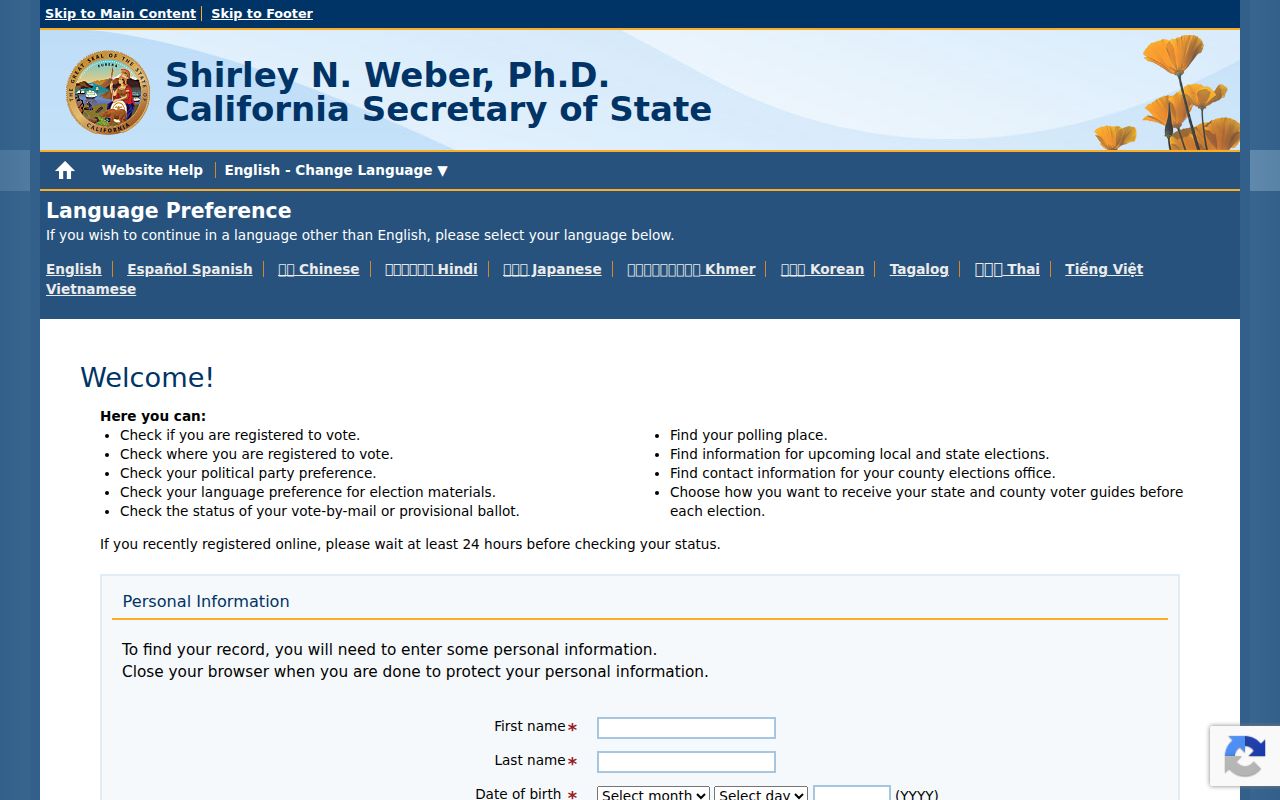
The screen reinforces the key distinction: a voter verifies a personal registration record instead of browsing Rancho Cucamonga voter rolls by name.
Rancho Cucamonga Registration Results
A successful self-check can confirm whether the person is registered, the name used on the registration, and party preference. Depending on the election cycle and record, My Voter Status can also show language preference, vote-by-mail or provisional-ballot status, a polling place or vote center, upcoming elections, and the county elections office contact. A voter may also manage the State Voter Information Guide opt-out through the service.
Voting history means participation, not ballot choice. A voter record may indicate that someone took part in an election, but the secret ballot prevents the record from revealing how that person voted. This is one of the most important limits when reading any current or historical voter data.
Note: A missing or stale result calls for county election assistance, not assumptions about eligibility, residence, or whether someone voted.
California Voter Records by Field
California voter registration information contains more fields than the self-check displays. Access depends on who requests it, the stated purpose, and whether a field is barred from release. The field inventory distinguishes common file content from data that remains withheld.
| Name | May appear in an approved voter file. |
|---|---|
| Residence and mailing address | May appear unless confidentiality protections apply. |
| County | Identifies the county of residence, including San Bernardino County for Rancho Cucamonga voters. |
| Party preference | May appear in the registration record and self-check. |
| Status and registration date | Can identify the record's current registration state and timing. |
| Precinct and districts | Connect the registration to election geography. |
| Voting history | Shows elections participated in, never selections made on a ballot. |
| Identity credentials and signature | Driver license, state ID, last four SSN, unique identifier, and signature images are not released. |
California keeps protected fields confidential. Elections Code section 2194 excludes identity numbers, unique identifiers, and signatures. Records protected under sections 2166 through 2166.8, including qualifying confidential voters, are also withheld from lists, rosters, and indexes.
Why California Voter Rolls Differ
Voter registration information is not ordinary open data in California. Elections Code sections 2188, 2194, and 18109, Government Code section 7924.000, and state election regulations govern access. Candidates, ballot-measure committees, and applicants with election, scholarly, journalistic, political, or approved governmental purposes may qualify. Approval is tied to the application and intended use, not mere curiosity about a neighbor.
That limited system differs from the general California Public Records Act process. The broader access-law framework and ordinary agency-request procedure belong with Rancho Cucamonga public records access. A request for voter data follows election law, the Secretary of State application, and its security terms instead.
Pre-registration records for 16- and 17-year-olds are excluded. California does not treat those minors as registered voters until age 18. Confidential elected-official or candidate contact details may have a narrow bona fide journalistic or governmental access route under Elections Code section 2166.9, subject to a Secretary of State determination.
Protected Rancho Cucamonga Voter Addresses
The California Secretary of State's Safe at Home program provides a substitute mailing address for qualifying people. It can protect survivors and victims in specified circumstances, along with other groups named by state rules. State, county, and city agencies accept the substitute address, and the Secretary of State forwards eligible mail.
A confidential voter does not appear in released lists, rosters, or indexes. Court-ordered confidentiality and public-safety officer protections can also close voter address data. Safe at Home is not an identity-change program, and it does not make every record vanish. Its role is to keep a protected home address from flowing through ordinary public-facing systems.
Note: Never try to defeat a confidential-voter flag or use another official database to reconstruct a protected home address.
Requesting California Voter Registration Files
The Secretary of State voter-file request program handles current statewide, county, district, and specific-voter data. A statewide file costs $15 per thousand records, capped at $100. A specific registration record costs $30, also capped at $100, and one application may name no more than 10 specific voters.
- Complete the official application and select the qualifying organization type, purpose, geography, and data requested. Explain the intended use plus the security and confidentiality plan.
- Sign the original certification, include a clear copy of a current driver license or state ID, and calculate the fee. A beneficiary must be named when another person or group will benefit.
- Mail or hand-deliver the package to California Secretary of State, Elections Division, 1500 11th Street, 5th Floor, Sacramento, CA 95814. Email and fax submissions are not accepted.
- Allow 7 to 14 business days for review and processing. Respond if the Elections Division needs clarification before approving the stated use.
County, statewide, and district extracts arrive on encrypted DVD as three tab-delimited text files: voter data, voting history, and district data. A specific-voter response comes by encrypted WinZip email attachment. The VoteCal Help Desk is available at (916) 654-1141 or votecalhelp@sos.ca.gov.
Rancho Cucamonga Voter File Requests
The application asks for more than a name and payment. Its fields let the Secretary of State test eligibility, define the requested slice of the voter roll, and document who will control the data. Complete answers reduce the risk of delay.
| Application part | Information supplied | When required |
|---|---|---|
| Applicant contact | Full name, phone, email, business and mailing addresses | Required, as applicable |
| Organization and purpose | Campaign, academic, media, legal, governmental, investigation, or other category; approved purpose and explanation | Required |
| Specific voters | Full name, date of birth, county, and residence address for up to 10 records | Only for specific-record requests |
| Data scope | State, county, district, voting history, inactive voters, or precinct-to-district data | As requested |
| Delivery | Shipping contact and mail, office pickup, other, or secure FTP selection | As applicable |
| Certification | Initials, signature, date, title, printed name, ID details, and contact information | Required |
Use the current voter file application and guidelines. File layouts and delivery choices depend on the request. Do not assume that selecting an option makes the request eligible; the stated purpose and statutory access rules still control.
Rancho Cucamonga Voter Data Limits
Approved data may be used only for the approved purpose. A recipient may not transfer it to an unauthorized person, use it for advertising or other commercial outreach, harass a voter or household, or expose the file on an unsecured public system. Elections Code section 18109 makes misuse a misdemeanor, and the application warns of significant fines.
Security duties continue after delivery. State regulations call for strong passwords, least-privilege access, session locking within 15 minutes, secure deletion, and encryption on portable devices. A breach or unauthorized use must be reported within 24 hours after discovery. These rules explain why the identity check and request application are substantive controls, not mere paperwork.
Keep the approved purpose intact. Do not share, publish, market with, or use voter records to stalk or harass anyone. Restrict access to authorized users and report any breach promptly.
Historic San Bernardino Voter Registers
Historical research follows a different path. The San Bernardino County Historical Archives holds Great Register of Voters records from 1866 through 1908. They are arranged alphabetically and are available in-house rather than through the modern My Voter Status system. Depending on the year, an entry may include occupation, age, height, physical description, and naturalization status.
Those details make the Great Registers valuable for genealogy, heir research, and tracing an earlier resident whose name appears in another county record. The Arda Haenszel California Room also lists the Great Register of San Bernardino County for 1880 through 1886. Its related directory and census holdings can help distinguish people who shared a name.
This older record geography predates the modern city. Searchers may need San Bernardino County context rather than a Rancho Cucamonga label. A historic entry proves registration details recorded at that time; it does not establish a present address or current voter status.
Keep Rancho Cucamonga Lookups Separate
Official systems next to the voter-record trail answer different questions. The California DOJ registry is not part of a voter file, and a county warning about lien letters is not an election record. Their assigned captures are useful because each shows why a reader should choose the custodian that actually owns the record and verify sensitive claims at an official source.
The California DOJ Megan's Law website is a separate public-safety registry:
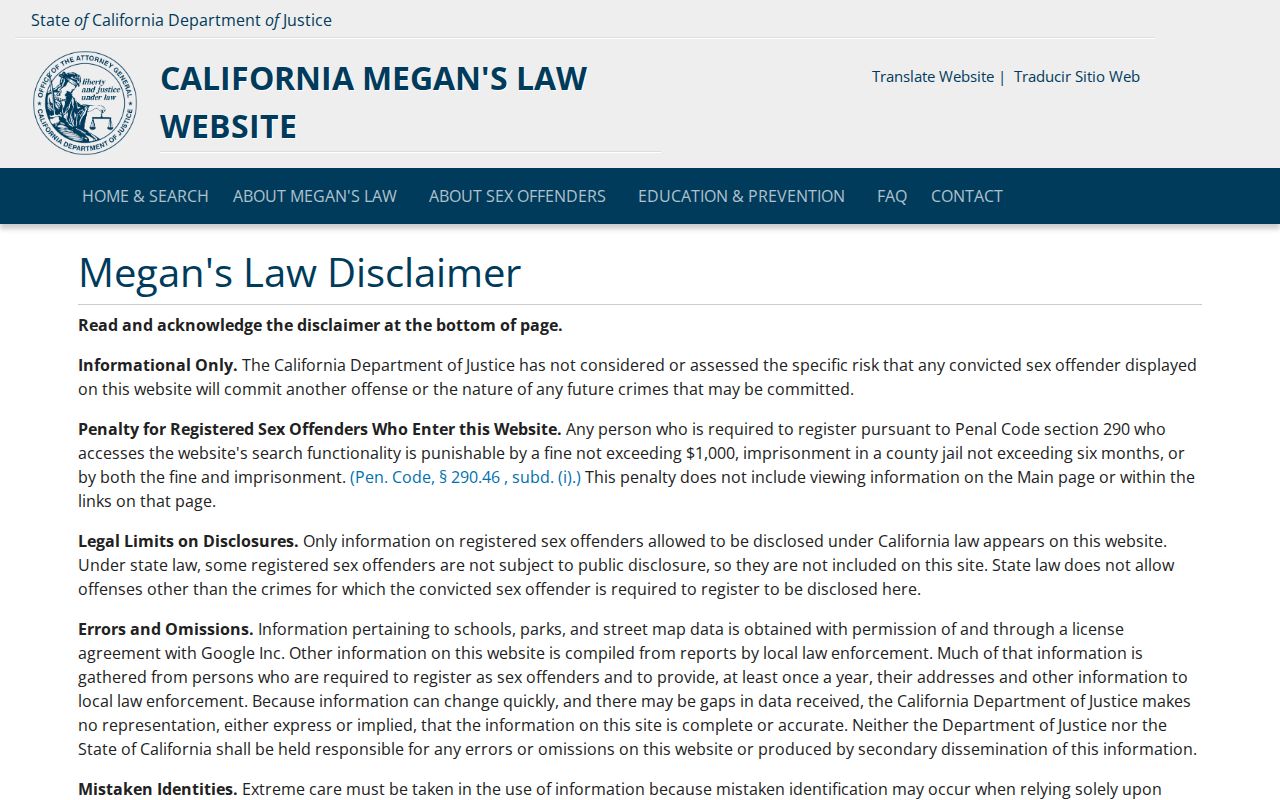
Its landing page should never be treated as a substitute for voter registration status, voter-file eligibility, or county election help.
San Bernardino County also published an official warning about misleading lien-payment letters:
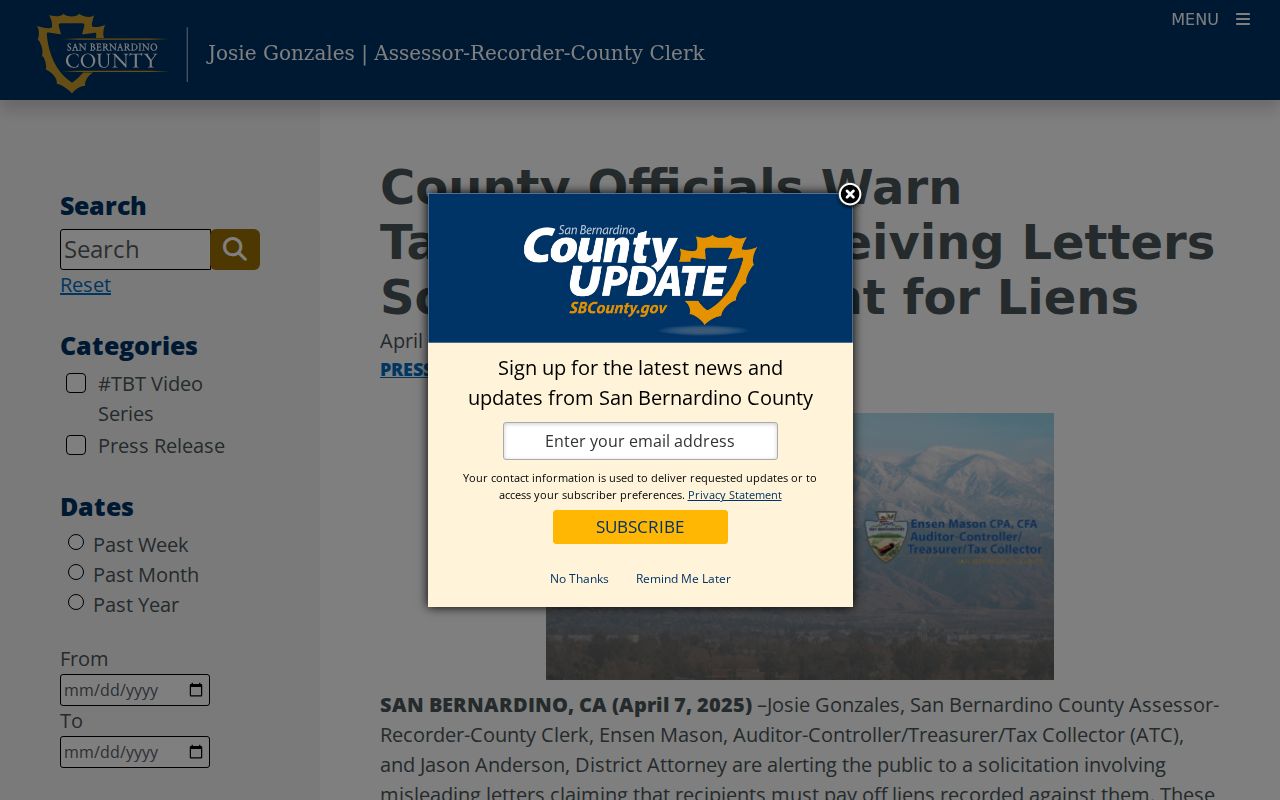
The warning concerns recorded property claims, not voter rolls. It illustrates a sound habit across record types: confirm the source, resist pressure, and never disclose protected identity data to an unverified requester.